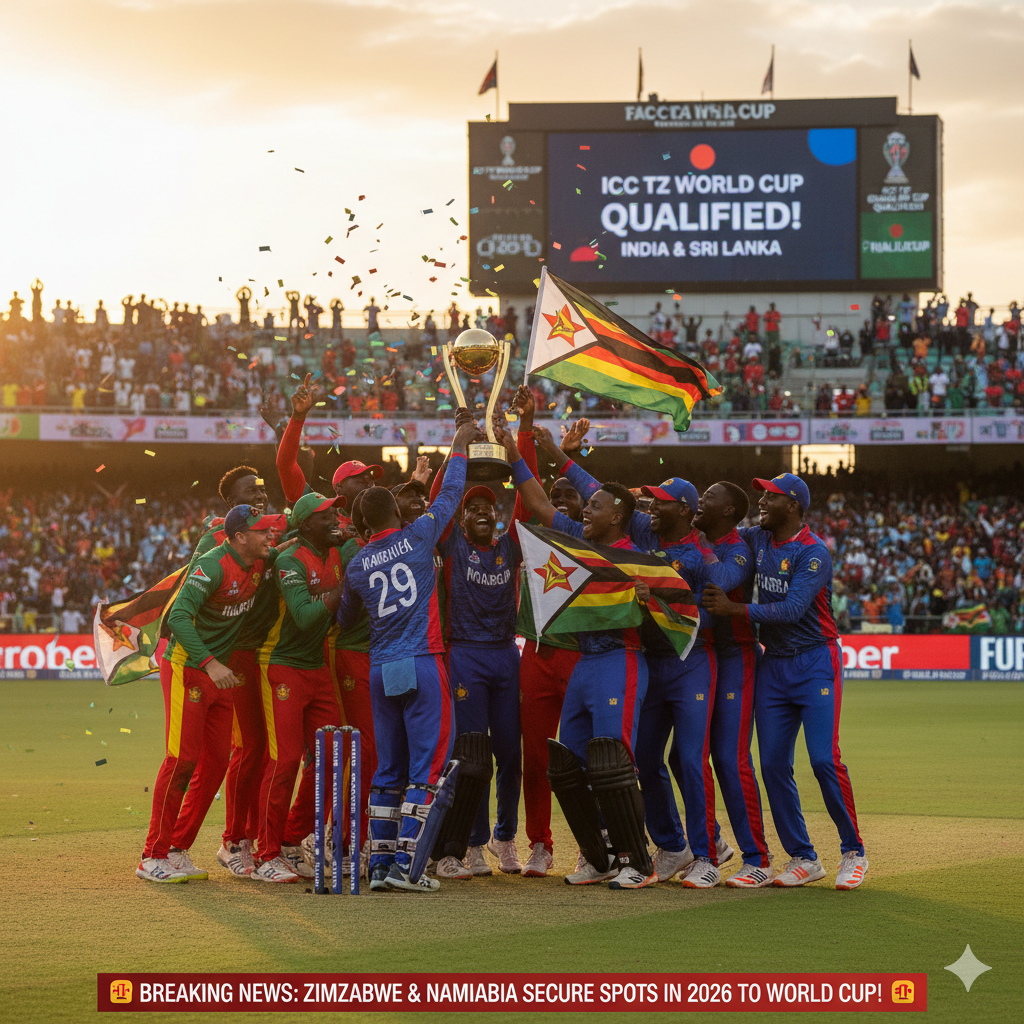
Two African nations have punched their tickets to cricket’s biggest stage.
Zimbabwe and Namibia have officially qualified for the 2026 T20 World Cup, set to be jointly hosted by India and Sri Lanka. The breakthrough moment came through the ICC’s qualification pathway, marking a significant achievement for African cricket on the global stage. Both teams will join the world’s elite in what promises to be one of the most competitive editions of the tournament.
Historic Milestone for African Cricket
The qualification represents years of development and consistent performances from both nations in regional and global competitions. Zimbabwe, with their rich cricket history, return to the World Cup stage with renewed confidence. Namibia, the underdogs who captured hearts at the 2021 edition, continue their remarkable rise in international cricket.
The 2026 T20 World Cup will be the first time the tournament is co-hosted by India and Sri Lanka. With both Zimbabwe and Namibia securing their spots early, they’ll have valuable time to prepare for the challenging conditions awaiting them on the subcontinent.
The Road to Qualification
Both teams navigated a competitive qualification process that tested their skills against regional rivals and emerging cricket nations. Zimbabwe’s experience in major tournaments played a crucial role in their campaign. Their blend of seasoned veterans and exciting young talent proved too strong for most opponents.
Namibia’s journey has been nothing short of inspirational. Since their breakthrough performance at the 2021 T20 World Cup in the UAE, where they defeated Scotland and nearly upset Ireland, the Namibian cricket team has continued building momentum. Their qualification confirms they’re not just tournament underdogs anymore—they’re legitimate competitors.
Zimbabwe’s T20 World Cup Legacy
Zimbabwe brings significant World Cup pedigree to the 2026 edition. The Chevrons have produced memorable moments in ICC tournaments over the decades, from upsets against major nations to individual brilliance from players like Heath Streak, Brendan Taylor, and more recently, Sikandar Raza.
The current squad features a healthy mix of experience and youth. Veterans like Raza provide leadership and match-winning ability, while emerging stars offer fresh energy and fearless cricket. This balance makes Zimbabwe a dangerous proposition for any team in India and Sri Lanka.
Their preparation will focus on adapting to subcontinental conditions. Spin bowling typically dominates in India and Sri Lanka, so Zimbabwe’s batting lineup will need to handle quality spin under pressure. Their own spin department should find the conditions favorable.
Namibia’s Continued Rise
Namibia’s qualification cements their status as a rising force in world cricket. The nation of just 2.5 million people continues punching well above its weight. Captain Gerhard Erasmus has been instrumental in building a team culture that thrives on belief and collective effort.
Key performers like David Wiese, the experienced South African-born all-rounder, provide invaluable tournament experience. The pace bowling department, featuring players who’ve competed in various T20 leagues globally, gives Namibia genuine wicket-taking options in all conditions.
What makes Namibia particularly dangerous is their fearless approach. Unlike teams carrying historical baggage or expectations, Namibia plays with freedom. They’ve already proven they can upset established nations when given the opportunity.
Tournament Format and Implications
The 2026 T20 World Cup will feature 20 teams competing across multiple venues in India and Sri Lanka. Zimbabwe and Namibia join automatic qualifiers like India, Sri Lanka, England, Australia, Pakistan, and other top-ranked nations. The tournament promises intense competition across both hosting countries.
For Zimbabwe, this qualification offers a platform to showcase their cricket resurgence. Recent investments in domestic cricket infrastructure and talent development are bearing fruit. A strong World Cup performance could attract more resources and opportunities for Zimbabwean cricket.
Namibia’s qualification continues their remarkable journey from associate nation to regular World Cup participants. Their success inspires other emerging cricket nations and proves that with proper planning and dedication, smaller cricket countries can compete at the highest level.
What’s Next for Both Teams
Both nations will use the coming months to fine-tune their preparations. Bilateral series against stronger opponents will be crucial for testing strategies and building confidence. Exposure to subcontinental conditions through tours or player participation in leagues like the IPL will prove invaluable.
Zimbabwe might schedule practice tours to India or Sri Lanka to acclimatize their players. Understanding pitch behaviors, managing heat and humidity, and adapting tactics will be key focus areas. Their coaching staff will analyze potential group-stage opponents and develop specific game plans.
Namibia will likely continue their approach of gaining experience through various T20 leagues worldwide. Many Namibian players already participate in franchise cricket, which exposes them to different conditions and high-pressure situations. This experience will be crucial when facing cricket’s biggest names.
Looking Ahead
The 2026 T20 World Cup promises to showcase cricket’s truly global nature. Zimbabwe and Namibia’s qualification demonstrates that the sport is thriving beyond traditional powerhouses. Both teams have the talent and temperament to cause upsets and create memorable moments.
Cricket fans worldwide will be watching to see if Namibia can replicate their 2021 heroics on an even bigger stage. Zimbabwe supporters will hope for a tournament run that reminds everyone of their nation’s cricket capabilities. One thing is certain—African cricket will be well-represented when the 2026 T20 World Cup begins.